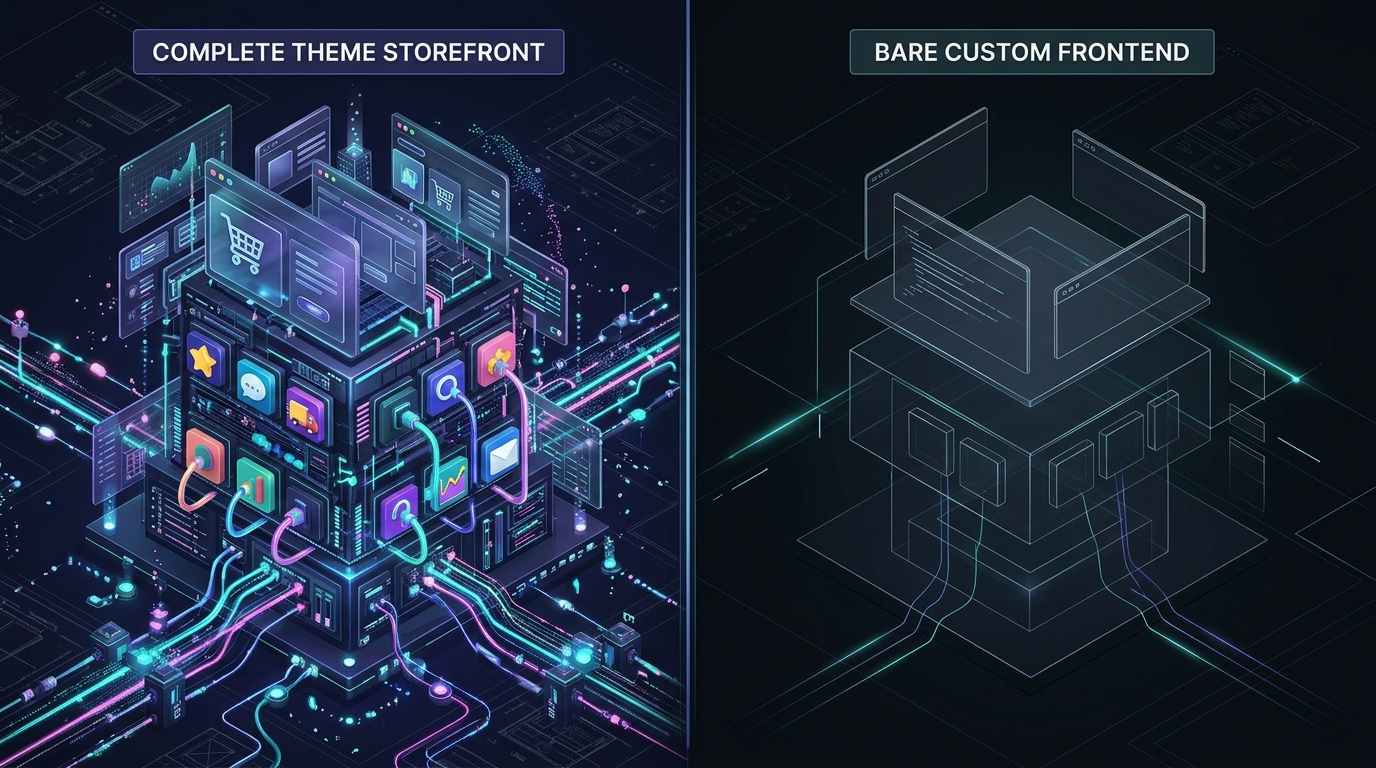
Headless Shopify gets pitched almost entirely on upside — more control, better performance, custom UX. All true. The trade-offs that come with giving up Shopify's theme ecosystem get mentioned a lot less.
A huge share of the Shopify App Store assumes a theme-based storefront — theme app extension blocks, Liquid snippets, script tags. Going headless often means losing one-click installs for apps you'd otherwise use, and building custom integrations against their APIs instead.
A theme updates and gets security/performance fixes from Shopify or the theme developer. A headless storefront is your own codebase — you own keeping it updated, performant, and secure, indefinitely, with no vendor doing that work for you anymore.
Headless earns its cost when the storefront genuinely needs something themes fundamentally can't do — a highly custom checkout-adjacent experience, non-ecommerce content deeply integrated with the store, or performance requirements a theme architecture can't hit. For most stores, it's solving a problem they don't actually have.