Evaluating LLM Output Quality Without a Dedicated Eval Team
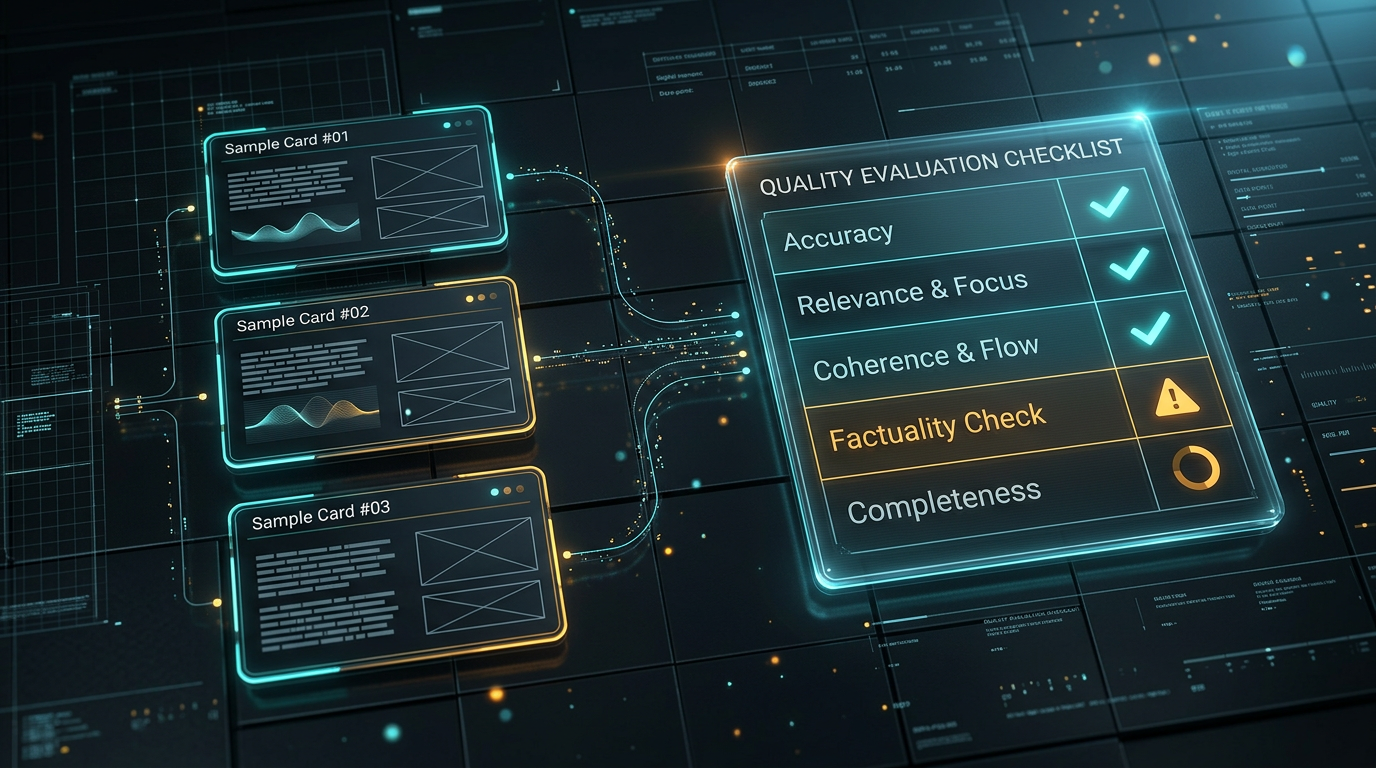
Ten to twenty real examples covering the actual range of inputs the system will see — including the tricky edge cases, not just the easy ones — is enough to catch regressions. A huge eval set is nice eventually, not a prerequisite to start.
Reviewing a handful of real production outputs weekly, scored against a simple rubric (correct, acceptable, wrong), catches drift and prompt regressions long before a fully automated eval pipeline would even exist for a small team.
Once volume is high enough that manual review can't keep pace, or a prompt change needs to be validated against the golden set before every deploy, that's the point automating pays for itself — not before.