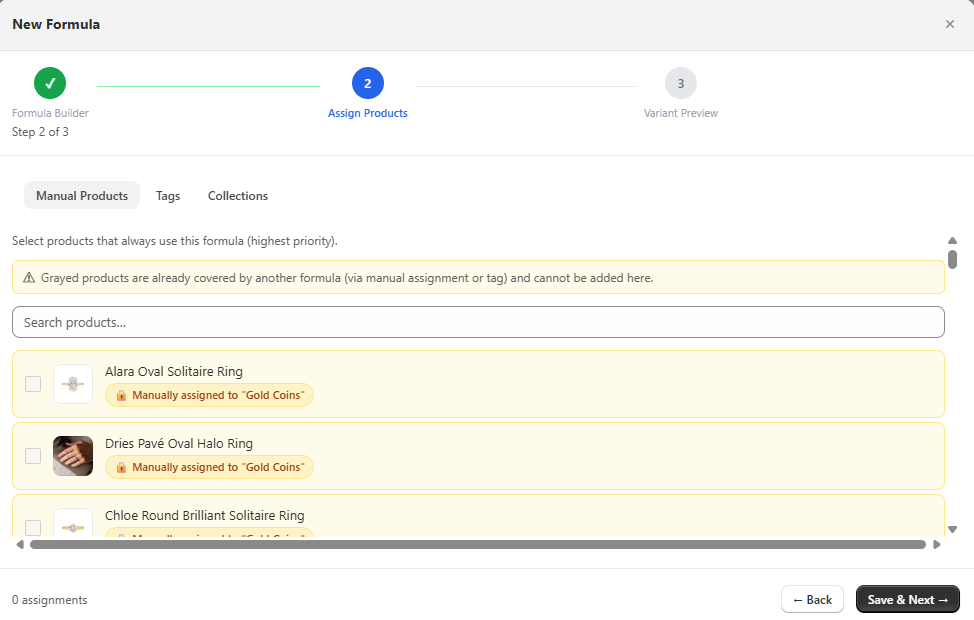
How to Price Diamond Jewelry on Shopify: A Complete Guide for Jewelers
Every diamond jewelry piece is priced by combining four cost components:
1. Metal cost — the cost of the gold, platinum, or silver in the setting. Calculated from the metal's weight, purity, and current spot price.
2. Diamond cost — the cost of the diamonds set in the piece, based on total carat weight × price per carat. Diamond pricing varies by quality grade (cut, colour, clarity, carat), but for catalog pricing, a fixed per-carat rate per quality tier is standard.
3. Making charge — the labour and craftsmanship cost. Usually expressed as a percentage of the metal cost (e.g., 15–25%), or as a flat amount per piece.
4. Markup / retail margin — your profit margin applied on top of total cost. Typically 30–100% depending on segment (budget vs luxury).
Here is the base formula most fine jewelers use:
diamondCost = diamondCarats × pricePerCarat
makingCost = metalCost × makingChargePercent
totalCost = metalCost + diamondCost + makingCost
retailPrice = totalCost × (1 + retailMargin%)
Example for an 18K gold ring with 0.25ct diamonds:
• Metal: 3g × ₹5,800/g × 0.75 = ₹13,050
• Diamonds: 0.25ct × ₹40,000/ct = ₹10,000
• Making charge: ₹13,050 × 15% = ₹1,957
• Total cost: ₹25,007
• Retail price (50% margin): ₹37,510
The formula above is straightforward for one piece. The problem is managing it across a catalog of 200+ products, each with different:
• Metal type (gold, platinum, silver) and purity (18K, 22K, 950 platinum)
• Metal weight per variant (a ring vs a necklace vs earrings)
• Diamond carat weight per variant
• Making charge percentage (varies by piece complexity)
And all of it changes when gold moves — because your metal cost component shifts even if everything else stays constant.
Managing this in a spreadsheet and manually pushing prices to Shopify is how most jewelers operate — and it's the source of both enormous time cost and pricing errors.
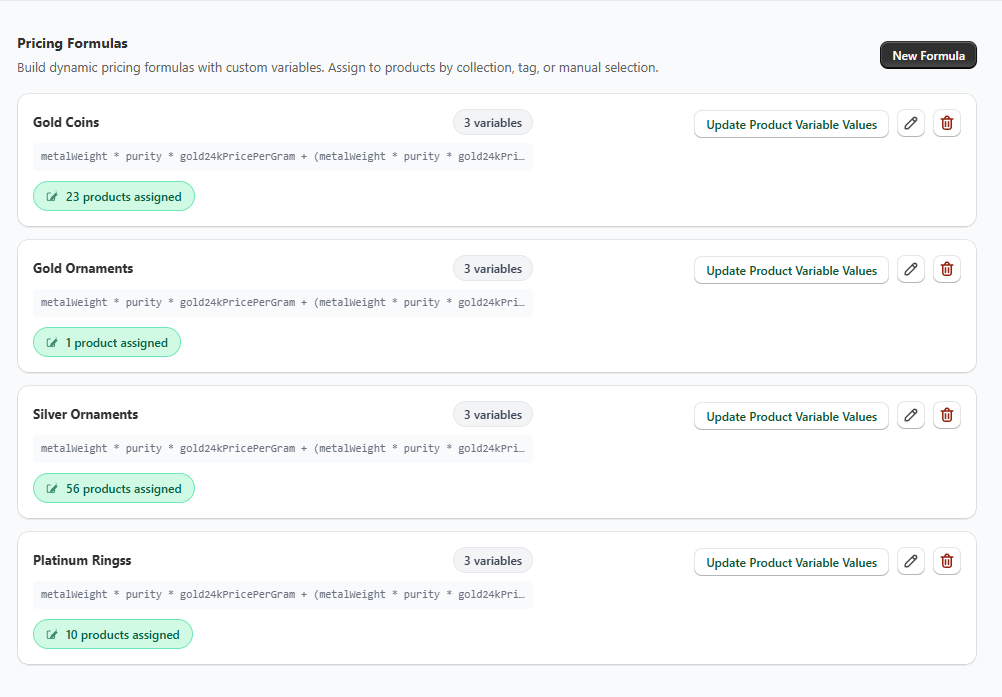
Live Metal Bulk Price Updater lets you encode the full diamond pricing formula — including carat weight — directly into the app, so prices recalculate automatically whenever metal spot prices change.
How it works for diamond jewelry:
Step 1 — Define your formula
In the Formula Builder, create an expression using all four variables: metalWeight, purity, makingCharge, and diamondCarats. Live gold/silver/platinum spot prices are injected automatically.
Step 2 — Enter per-variant data
In the Variant Editor, enter the metal weight, purity, making charge %, and diamond carats for each variant. You do this once — the values are stored in the app.
Step 3 — Let it run
Enable Auto-Approve and prices recalculate daily based on live metal rates. Diamond carat cost stays constant (you set the per-carat rate); only the metal component fluctuates with the market.
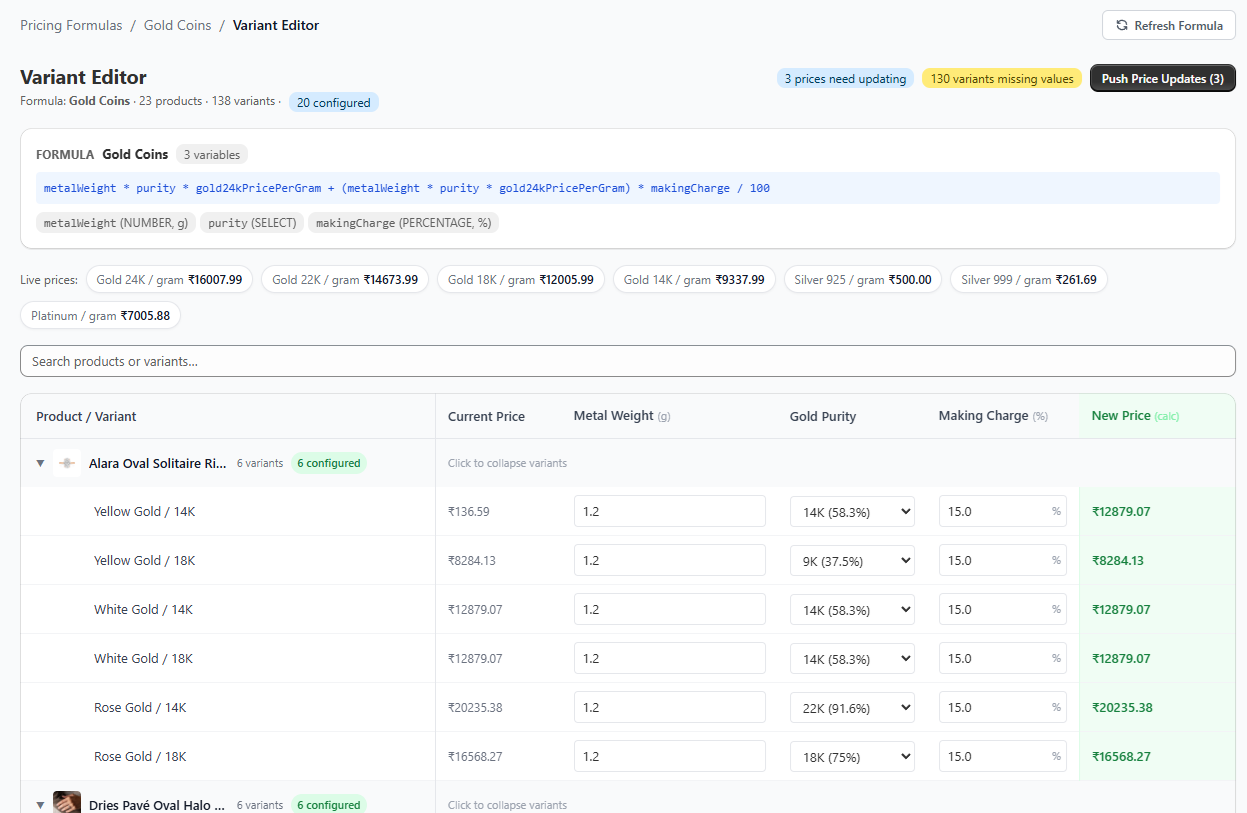
Unlike gold, diamond prices don't have a single live spot rate — they vary by cut, colour, clarity, and carat weight. For catalog pricing, the practical approach is to define tiers:
• SI/HI grade diamonds (budget range): set a flat rate per carat — e.g., ₹35,000/ct
• VS/GH grade diamonds (mid range): e.g., ₹55,000/ct
• VVS/EF grade diamonds (premium): e.g., ₹90,000/ct
You update this rate manually in the app when your wholesale diamond costs change (typically quarterly, not daily). The formula then handles the per-variant calculation automatically using whichever rate applies to that product group.
Diamond jewelry often carries your highest average order values — which means pricing errors hit hardest here. Two safeguards to use:
Stop-loss floors per metal — set a minimum acceptable price per gram for the gold/platinum component. If gold drops sharply, the floor prevents your total from dipping below cost.
Preview before pushing — always review the before/after price diff for high-value pieces before committing any bulk update. The app shows the full comparison so you can spot outliers before they go live.
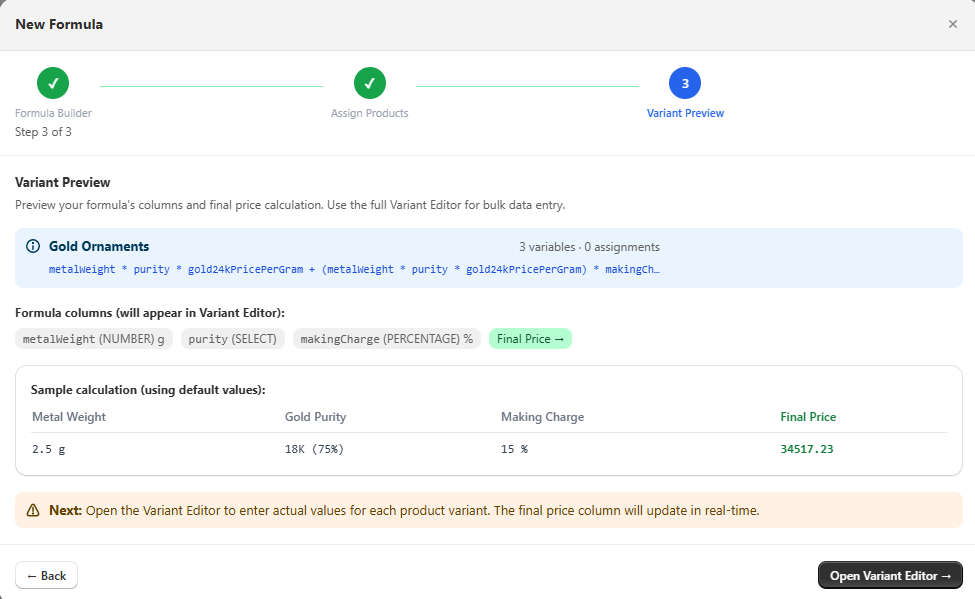
Live Metal Bulk Price Updater supports full diamond + metal pricing formulas out of the box. Free for 7 days, no credit card required.
Install Free on Shopify →
See the full app overview or read the FAQ.