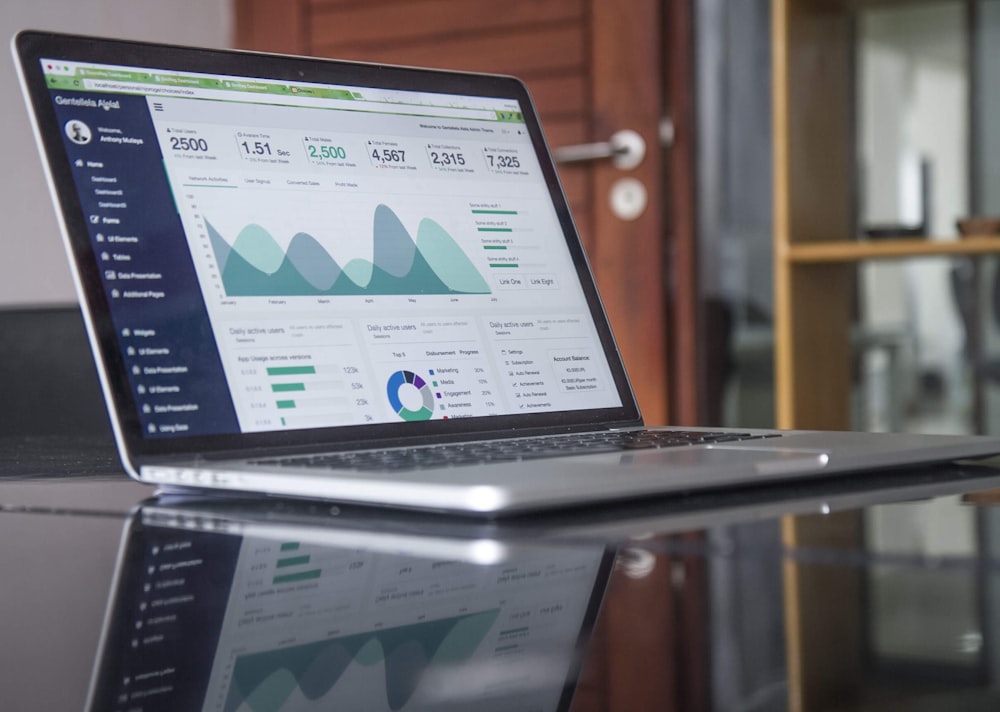
AI-Powered Data Analysis for Small Businesses
The steepest barrier to entry in traditional data analysis is query languages. To extract meaningful insights from a database, an employee typically needs to know SQL, Python, or advanced Excel formulas like VLOOKUPs and PivotTables. With the advent of AI, this technical barrier has vanished. We have entered the era of "conversational analytics," where the user interface for a complex database is simply a chat window.
SELECT * FROM sales WHERE category='shoes' GROUP BY month. You just type: "Show me the monthly shoe sales trend for the last year."
Tools like ChatGPT's Advanced Data Analysis, Microsoft Fabric, and various AI-integrated BI platforms allow a small business owner to upload a raw CSV export of their Shopify sales data and simply ask questions. For example: "Which product categories had the highest return rate in Q3, and what was the most common reason listed?" The AI instantly parses thousands of rows, generates the underlying Python code to process the data, executes it in a secure sandbox, and returns a plain-English summary accompanied by a generated chart. This empowers non-technical founders to become truly data-driven operators.
Analyzing past data is useful for understanding what happened, but the true power of business intelligence lies in predicting the future. Predictive modeling used to require complex statistical software (like SPSS or SAS) and specialized mathematical knowledge. Now, AI platforms have packaged these advanced capabilities into highly accessible, user-friendly interfaces.
Consider a local retail store. They can feed their past three years of daily inventory and sales data into an AI tool. The AI can analyze seasonal trends, recognize micro-anomalies, factor in external datasets like local weather patterns or economic indicators, and output a highly accurate inventory purchasing forecast for the upcoming quarter. It can predict which SKUs are likely to stock out during a specific holiday and which ones will collect dust. This level of predictive insight drastically reduces carrying costs, prevents lost revenue from out-of-stock items, and optimizes cash flow—a critical metric for SMB survival.
Small businesses often collect large amounts of unstructured data—customer support emails, Amazon product reviews, social media mentions, and NPS survey responses. Quantifying this text manually is almost impossible. A human can read 50 reviews to get a general "vibe," but they can't accurately synthesize 5,000 without missing crucial nuances or falling victim to confirmation bias.
AI models excel at Natural Language Processing (NLP). An SMB can dump thousands of customer reviews into an LLM and prompt it to categorize the feedback by sentiment (positive, neutral, negative) and extract recurring themes. The AI might reveal that while overall sentiment is 85% positive, 40% of the negative reviews explicitly mention "slow shipping to the East Coast" or "confusing instructions on page 3 of the manual." This provides the business owner with clear, immediate operational directives that would have otherwise remained buried in a mountain of text.
As small businesses rush to embrace AI analytics to gain a competitive edge, they must be extremely cautious about data privacy. Uploading your company's raw financial data, or worse, personally identifiable information (PII) of your customers, into a public AI tool like the free consumer version of ChatGPT is a massive security risk. In many cases, those platforms explicitly state in their Terms of Service that they may use user input data to train their future models.
It is critical to use enterprise-grade AI tools or secure API integrations where data retention policies explicitly state that your data will NOT be used for model training (such as OpenAI's API terms or ChatGPT Enterprise). Before analyzing customer data, businesses must implement strict processes to anonymize and aggregate datasets. Stripping out names, emails, and phone numbers ensures compliance with stringent global regulations like GDPR or CCPA. Data security must be foundational to your AI strategy, not an afterthought bolted on after a breach occurs.
At KLYX, we firmly believe that small businesses deserve the exact same level of actionable insight as Fortune 500 companies. We help our clients build custom, AI-powered analytics dashboards tailored to their specific Key Performance Indicators (KPIs). Rather than forcing clients to rely on generic SaaS platforms, we connect secure, private LLM APIs directly to your existing infrastructure—whether that's a Shopify store, a HubSpot CRM, or a custom SQL database.
This architecture allows your team to log in every morning and converse with your data securely and privately. We build the automated pipelines to clean the data nightly, the security protocols to protect it from exposure, and the AI integrations to interpret it accurately. The result is a highly agile business that moves faster, operates leaner, and makes strategic decisions based on hard data rather than guesswork.